
Keywords
Intravenous fluids
Pre-operative
How to Cite
Abstract
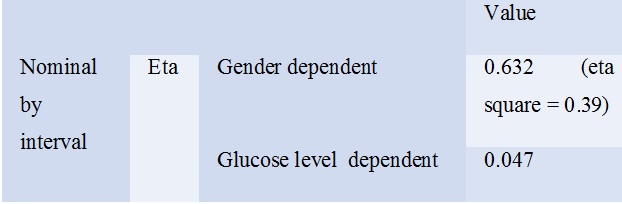
Introduction: Peri-operative glycemic control is an important factor for post-operative recovery and is well protocoled for diabetic patients in every setup. It is not always so with non-diabetic patients. This study aimed to observe the pre-operative glucose level and prevalence of hypoglycemia in patients presenting for surgery and its association with the duration of nil per oral period (NPO), age and intravenous fluids used in the pre-operative period. Methods: A cross-sectional study was conducted in the Department of Anesthesiology in a Nepalese medical college including all the patients posted for elective surgery over a period of three months. Socio-demographic and clinical details of the participants were collected in the operating theatre. Duration of NPO period and intravenous fluid prescribed in the pre-operative fasting period were recorded. A glucose strip test was performed on all the participants. Results: Participants were found to have fasted for an unnecessarily longer duration (12.84±2.27 hours). The incidence of hypoglycemia in patients posted for elective surgery was very high (43.3%). Ringer lactate and normal saline were equally prescribed (38.4%) and dextrose-normal saline was prescribed in the rest of the participants. Gender and type of intravenous fluids were positively correlated whereas NPO period was negatively correlated in overall participants though statistically insignificant. In hypoglycemic participants, we observed that lower glucose was influenced by pre-operative fluids, age and NPO duration. Conclusion: Pre-operative use of glucose-containing fluids during NPO period is an important step to prevent hypoglycemia and related consequences.
References
Takesue Y, Tsuchida T. Strict glycemic control to prevent surgical site infections in gastroenterological surgery. Ann Gastroenterol Surg. 2017;1(1):52-9. DOI: https://dx.doi.org/10.1002/ags3.12006
Amiel SA, Gale E. Physiological responses to hypoglycemia. Counter regulation and cognitive function. Diabetes care. 1993; 16 (suppl 3):48- 55. DOI: https://doi.org/10.2337/diacare.16.3.48
Ko GTC, Wai HPS, Tang JSF. Effects of age on plasma glucose levels in non-diabetic Hong Kong chinese. Croat Med J. 2006;47(5):709-13. PMID: 17042062
Fathallah N, Slim R, Larif S, Hmouda H, Ben Salem C. Drug induced hyperglycemia and diabetes. Drug Saf. 2015;38(12):1153-68. DOI: https://doi.org/10.1007/s40264-015-0339-z
Duggan EW, Carlson K, Umpierrez GE. Peri-operative hyperglycemia management: An update. Anesthesiology. 2017;126(3):547-560. DOI: https://doi.org/10.1097/aln.0000000000001515
Pattajoshi S, Nerurkar AA, Tendolkar BA. A cross sectional observational analysis of pre-operative blood glucose levels in nondiabetic patients presenting for surgery. Res inno in anesth. 2017;2(2):29-33. [Link]
Workgroup on Hypoglycemia, American Diabetes Association. Defining and reporting hypoglycemia in diabetes: A report from the American Diabetes Association Workgroup on Hypoglycemia. Diabetes Care. 2005;28:1245– 9. DOI: https://doi.org/10.2337/diacare.28.5.1245
Graham BB, Keniston A, Gajic O, Trillo Alvarez CA, Medvedev S, Douglas IS. Diabetes mellitus does not adversely affect outcomes from a critical illness. Crit Care Med. 2010;38:16–24. DOI: https://doi.org/10.1097/ccm.0b013e3181b9eaa5
Krinsley JS, Grover A. Severe hypoglycemia in critically ill patients: Risk factors and outcomes. Crit Care Med. 2007;35:2262– 7. DOI: https://doi.org/10.1097/01.ccm.0000282073.98414.4b
Hermanides J, Bosman RJ, Vriesendorp TM, Dotsch R, Rosendaal FR, Zandstra DF, et al. Hypoglycemia is associated with intensive care unit mortality. Crit Care Med. 2010;38:1430– 4. DOI: https://doi.org/10.1097/ccm.0b013e3181de562c
Leese GP, Savage MW, Chattington PD, Vora JP. The diabetic patient with hypertension. Postgrad Med J. 1996;72:263–8. DOI: https://doi.org/10.1136/pgmj.72.847.263
Rice MJ, Pitkin AD, Coursin DB. Review article: Glucose measurement in the operating room: More complicated than it seems. Anesth Analg. 2010;110:1056–65. DOI: https://doi.org/10.1213/ane.0b013e3181cc07de
Hong M, Yon H. Influence of pre-operative fasting time in blood glucose in older patients. K Korean Acad Nurs. 2011;41(2):157-64. DOI: https://doi.org/10.4040/jkan.2011.41.2.157.
Shah M, Mazoorullah Haq TU, Akhtar T. The effect of preanesthetic fasting on blood glucose in children undergoing surgery. J Pak Med Assoc. 1990;40(10)243-5). PMID: 2123262
D Roberts, T Meakem, C Dalton, D Haverstick, C Lynch III. Prevalence of Hyperglycemia in a Pre-Surgical Population. The Internet Journal of Anesthesiology. 2006;12(1). [Link]
Sprague JE, Arbeláez AM. Glucose Counterregulatory Responses to Hypoglycemia. Pediatr Endocrinol Rev. 2011; 9(1): 463–475. PMID: 22783644
- The Journal of Lumbini Medical College (JLMC) publishes open access articles under the terms of the Creative Commons Attribution (CC BY) License which permits use, distribution and reproduction in any medium, provided the original work is properly cited.
- JLMC requires an exclusive license to publish the article first in its journal in print and online.
- The corresponding author should read and agree to the following statement before submission of the manuscript for publication,
- License agreement
- In submitting an article to Journal of Lumbini Medical College (JLMC) I certify that:
- I am authorized by my co-authors to enter into these arrangements.
- I warrant, on behalf of myself and my co-authors, that:
- the article is original, has not been formally published in any other peer-reviewed journal, is not under consideration by any other journal and does not infringe any existing copyright or any other third-party rights;
- I am/we are the sole author(s) of the article and have full authority to enter into this agreement and in granting rights to JLMC are not in breach of any other obligation;
- the article contains nothing that is unlawful, libelous, or which would, if published, constitute a breach of contract or of confidence or of commitment given to secrecy;
- I/we have taken due care to ensure the integrity of the article. To my/our - and currently accepted scientific - knowledge all statements contained in it purporting to be facts are true and any formula or instruction contained in the article will not, if followed accurately, cause any injury, illness or damage to the user.
- I, and all co-authors, agree that the article, if editorially accepted for publication, shall be licensed under the Creative Commons Attribution License 4.0. If the law requires that the article be published in the public domain, I/we will notify JLMC at the time of submission, and in such cases the article shall be released under the Creative Commons 1.0 Public Domain Dedication waiver. For the avoidance of doubt it is stated that sections 1 and 2 of this license agreement shall apply and prevail regardless of whether the article is published under Creative Commons Attribution License 4.0 or the Creative Commons 1.0 Public Domain Dedication waiver.
- I, and all co-authors, agree that, if the article is editorially accepted for publication in JLMC, data included in the article shall be made available under the Creative Commons 1.0 Public Domain Dedication waiver, unless otherwise stated. For the avoidance of doubt it is stated that sections 1, 2, and 3 of this license agreement shall apply and prevail.
Please visit Creative Commons web page for details of the terms.